
Student Film Awards 2026
GIEFF Student Award 2026 Ceremony
The student award giving ceremony was taking place in the Alte Mensa. All jury members and many filmmakers were present. Some filmmakers were able to join online.
GIEFF Student Award 2026
The Jury (Itsushi Kawase, Anna Ramella and Caterina Sartori) decided to award the GIEFF student prize to a film from Germany and about Mexico.
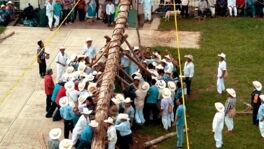
The GIEFF Student Award went to the film
Learning to Fly
A Film by: Amelie von Marschalck
Germany, 2024, 49 min
Location: Mexico
Based on grounded anthropological research, the films “Learning to Fly” captures dedicated efforts of Totonako ethnic minorities in the Mexican highlands of Puebla to pass on their 2,000 year old flying ceremony to the next generation. While the film documents the intense and raw energy of the ceremony, it also insightfully reveals the inner emotional dynamics among performers. The film also traces the quiet preparatory stages alongside the crucial learning process of the ceremony, maintaining an empathetic proximity to its subjects. By portraying the magnificence of the performance, the subtle human efforts behind it, and the essential knowledge of the ceremony itself, the film has the potential to foster a vital intergenerational dialogue among the Totonako community.
“Learning to Fly” will serve as an invaluable living archive - a cultural touchstone that the community can return to at any time to ensure the continuation of their cultural heritage for generations to come.
Two Honourable Mentions
Additionally the jury awarded two special mentions.
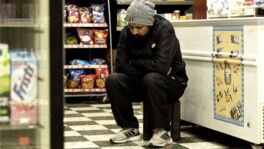
One Honourable Mention went to the film
A Happy Place
by Siddhant Sarin, Indian.
Belgium, 2025, 22 min
Location: Belgium, Hungary, India, Portugal
„A Happy Place“ draws us into the lifeworld of Happy, an undocumented migrant from India, who spends his days working at a corner shop in Brussels. The film reminds us of the stories hidden in plain sight, of separated families, the hardships of migration, and the pain of longing for one’s loved ones. While the film offers an intimate exploration into the feeling of solitude, it never strains to illustrate drama or to search for metaphoric imagery. Nor does it resort to becoming explanatory to prove its point. Rather, it takes the audiovisual strikingly serious, inviting us into Happy’s emotional world with intimacy and attentiveness in every frame. It is a sensitive and carefully crafted portrait of endurance and solitude, and an important reminder to the much needed empathy for those who make a living in one of the countless spaces across Europe where invisible lives quietly unfold.
In these films, we saw a diversity of approaches and techniques: we saw Collaborative films, activist films, experimental approaches to both camera work and fieldwork encounter. We were reminded of times in which we were confined to our homes and could relate quite much. Saw the potential of students of engaging with problematic pasts, and uncertain futures, whether politically, ecologically or socially. But we were also reminded, as good ethnography does, of the power of the present - the actions we can take, the solidarity we can show and the importance of community in our endeavors - as scholars, as filmmakers and as people.
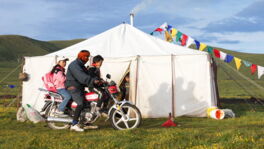
One Honourable Mention went to the film
My Lens, My Landby Ke Chen, Chinese
Location: China
USA, 2024, 23,5 min
Manfred Krüger Student Award
The Jury (Sandra Eckardt and Michael Schönhuth) decided to award the Manfred Krüger student price to a film about Denmark.
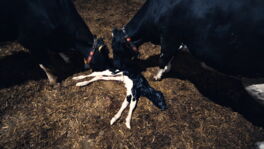
The Manfred Krüger Student Award went to the film
Milking by Albert Osbæck Adelkilde, Danish
Norway, 2025, 30 min
Location: Denmark
Milking convinced the jury through its distinctive and consistently realized conceptual approach. Exploring the technologically organized environment of a contemporary dairy farm, the film focuses on the relationships between cattle, humans, and automated systems — all occupying an equal cinematic space. Through its observational and sensorial approach, meaning emerges not through explanation, but through rhythms of duration, repetition, sound, and proximity.
A particular strength of the film lies in its perspective. By frequently filming at the eye level of the cattle, the filmmaker creates an unusual proximity to their lifeworld and to their coexistence with machines. Long takes, a precise visual rhythm, and an immersive sound design transform technology from mere background into a tangible environment shaping all forms of life within the system. Without moralizing or commentary, the film opens a space in which humans, animals, and machines appear as interconnected actors within a shared ecological and technological environment.
Departing from familiar ways of seeing, Milking offers a polyphonic portrait marked by openness, precision, and remarkable cinematic coherence. Beneath the apparent smoothness of highly optimized and sustainability-oriented farming practices, the film subtly reveals the tensions that emerge where humans, animals, and technological systems continuously interact through shared interfaces and mutual dependencies.
One of the particular strengths of this ethnographic graduation film lies in the fact that the filmmaker himself appears to have taken responsibility for most aspects of the production — from concept and camera work to editing. Precisely because this award is dedicated to the memory of the outstanding cinematographer Manfred Krüger, whose visual signature shaped ethnographic filmmaking at the Institute for Scientific Film in Göttingen for many years, the jury is especially pleased to present this award to Albert Adelkilde.
Two Honourable Mentions
Additionally the jury awarded two special mentions.
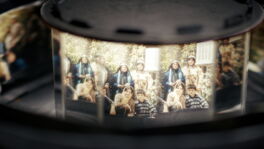
One Honourable Mention went to the film
We Might Be Alike in Many Ways by Monirsadat Jazaeri, Iranian.
Germany, 2025, 17,5 min
Location: Germany, Iran
This short film stands out through its exceptional ability to condense a complex biographical and emotional narrative into a highly refined cinematic form. It tells the story of a mother and her son, separated by migration and reunited years later. Themes of guilt, distance, and tentative reconciliation lie at the center of the film.
The film’s strength lies in its dramaturgical precision. Through the interplay of archival footage, photographs, carefully composed contemporary scenes, and recurring motifs — such as the music box or the suitcase — a layered narrative emerges that moves effortlessly between past and present. The editing, in particular, is extraordinarily subtle and allows emotional and temporal transitions to unfold without overstatement.
At the same time, the film maintains a remarkable degree of intimacy. The camera remains restrained, often at eye level, allowing moments of vulnerability, hesitation, and small disturbances to remain visible. This creates a sense of authenticity rarely achieved in such sensitive contexts. The palpable trust between filmmaker and protagonists enables scenes of great emotional depth without ever becoming intrusive. The encounter between filmmaker and protagonists itself appears marked by a quiet tenderness.
The film offers a hopeful perspective by suggesting that differences can be lived with acceptance and respect. At the same time, it deliberately avoids closure. The relationship between mother and son remains open, shaped by both closeness and tension. It is precisely this refusal of simplification that lends the film both emotional and analytical credibility.
Although the film clearly emerges from a professional documentary context, it possesses a strong ethnographic sensibility. It places lived experience and relational complexity at its center and demonstrates how cinematic craftsmanship can deepen our access to human experience. It moves us.

One Honourable Mention went to the film
Dragging Chains by Emil Victor Hvidtfeldt, Danish.
Norway, 2024, 30 min.
Location: Grenada
Dragging Chains is among the most impressive films in the selection because of the way it succeeds in combining sensorial immersion with analytical depth. Set against the backdrop of the Jab Jab Carnival in Grenada, the film initially draws viewers into a dense visual and acoustic spectacle of oil, chains, rhythm, and movement. Yet it never remains on the level of spectacle alone. Through carefully situated encounters with participants — embedded in meaningful contexts such as workshops, homes, and cultural institutions — deeper historical and social layers gradually unfold.
The film’s particular strength lies in its ability to move from immediate sensory experience toward reflection. Themes such as colonial history, resistance, identity, and embodied memory are not explained didactically but emerge organically from the voices and practices of the participants themselves. Especially effective is the way personal narratives mirror the movement of the film itself — from fascination toward understanding.
The cinematography and visual composition demonstrate a high degree of formal control. In particular, the interplay of black, red, and blue functions not only aesthetically but symbolically, structuring the viewer’s perception of the material. Sound design and editing further intensify the embodied experience, allowing rhythm and movement themselves to carry meaning.
Overall, the film achieves a rare synthesis: it renders cultural practice simultaneously as spectacle, history, and contemporary expression. Its strength lies in making these dimensions visible not through external explanation, but through cinematic means.
At the same time, the film leaves us curious about perspectives that remain largely outside its frame — especially those of the women within Jab Jab culture. What rhythms do they inhabit, shape, and transform within this world?