Filmmakers

Intertidal
Marina Espinach
Marina Espinach is from Barcelona and a graduate from the University of Manchester in Visual Anthropology. Her first short film “Cuando acabe el verano” was selected in the Shortcat2020 catalog, in several national festivals, and awarded in the New Authors section at the Sitges International Film Festival. Her short music documentary “Women in the studio” was awarded at Festival de Málaga and selected by In-Edit Festival. In 2025, she distributed her short films “Intertidal” (co-directed with Olivia Hird) and “The black frontier”, while developing her first documentary feature within IAAC’s Forested, a european-funded research/arts project.

Olivia Hird
(co-director)

Ea - Home on Givær
Ursula Möll
Ursula Möll is a visual anthropologist and filmmaker from Bern, Switzerland. She holds a Master’s degree in Visual Anthropology at the University of Tromsø (UiT) in Norway. Her film “Ea – Home on Givær”, created as the final project of her studies, reflects her interest in human–animal relationships within the context of the climate crisis and biodiversity loss, combined with a character-driven storytelling approach.
Milking
Albert Osbæck Adelkilde
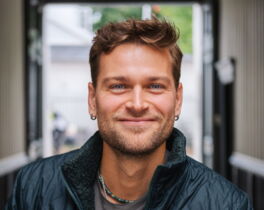
Albert Osbæck Adelkilde is a Danish documentary filmmaker with a background in Visual Anthropology at the University of Tromsø (UiT) in Norway. His graduation film “Milking” (2025) follows life on a modern dairy farm among cows, farmers and robots. He works with observational and sensorial filmmaking techniques and explores how technology shapes relations between humans and other forms of life.

Layers of Confidence
Lou Boshart
Lou Boshart is a Dutch anthropologist and academic filmmaker. He graduated Cum Laude from Leiden University with a specialization in Visual Ethnography. In 2025, his ethnographic film “Layers of Confidence”, which examines how technologies used in rat eradication programs transform the ways people imagine and engage with animals, won the “Excellence in Visual and Multimodal Ethnography Thesis Prize”. The jury honored Boshart’s film because of its interesting topic, effective storytelling and an original lens that reflects anthropological thinking.

Caution Colonialism
Elisa Erpenbeck
Elisa Erpenbeck studied Cultural Anthropology and currently finishes their Master's degree in Visual Anthropology at the Institute of Cultural Anthropology/European Ethnology at the University of Göttingen. “Caution Colonialism” is Elisa's first film project. Their work combines filmic narrative techniques with anthropological analysis to open up critical perspectives on the consequences of colonial history.

Mara Müller
Mara Müller has a Bachelor's degree in Sociology and Cultural Anthropology/European Ethnology and is currently studying for a Master's degree in Visual Anthropology at the University of Göttingen. She is particularly interested in ethnographic film as a means of critically examining social structures. “Caution Colonialism” is her first film project.
Dragging Chains
Emil Victor Hvidtfeldt
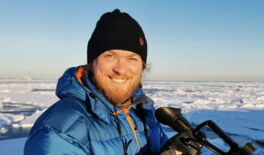
Emil Victor Hvidtfeldt is a Copenhagen-based visual anthropologist, trained in ethnographic filmmaking at The Arctic University of Norway. Following several years of engagement with music and creative activism in Copenhagen, his master’s project turns to a Caribbean context, examining how music and performance intersect with ongoing processes of decolonization. His work is shaped by a sustained interest in artistic practice as a space for political expression and cultural transformation. He is an active member of the Nordic Anthropological Film Association, where he serves on the film selection committee and as treasurer.

As I Witness
Pamela Andrea Martinez Barrera
Pamela Martinez is a Venezuelan MFA graduate in the Documentary Media Program at Stanford from Caracas. In 2020, she was awarded NYUAD’s Summer Film Grant with which she developed her documentary “Estado Fallido” (Failed State) (2021) which explores the political and social polarization inside the community of Canaima, Venezuela, where the indigenous community Pemon Kamarakoto attempts to live from tourism despite the deep-rooted socio-economic crisis of Venezuela. Estado Fallido was selected for the International Youth Film Festival at the National Institute of Design in Ahmedabad, India

Then...Now...Forever
Hemant Kumar
Hermant Kumar is an Indian filmmaker who was born in Haridwar. Growing up amidst the Ghats and the timeless flow of the Ganga, he developed an early fascination with memory, ritual, and the invisible threads that connect families across generations. He began his studies in engineering at Indian Institute of Technology Indore before shifting his focus toward filmmaking at the National Institute of Design, where he found a visual language to explore human relationships, cultural memory, and oral histories. His work reflects on traditions, identity, and the quiet spaces where personal and collective histories meet.

My Lens, My Land
Ke Chen
Ke Chen is a Chinese documentary filmmaker based in New York City, holding an MA in News and Documentary from the New York University (NYU). Her work explores the relationship between land and community through an anthropological lens, approaching filmmaking as a sustained presence grounded in care. She is currently co-producing and serving as post-production editor on a feature-length documentary set in the deep desert of Daliyabuyi, Xinjiang, following a Uyghur village leader and his community as intensifying climate conditions unsettle their relationship to land, livelihood, and home.
A Happy Place
Siddhant Sarin
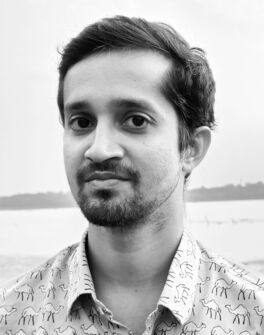
Siddhant Sarin graduated from Government Law College in Mumbai before pursuing a career in filmmaking. He is a National Award-winning filmmaker, educator from India and co-founder of Docustan. His film “Ayena (Mirror)”, supported by the Asian Cinema Fund, Docedge, EIDF and the Lithuanian Film Centre, premiered at festivals including Krakow Film Festival and Dokfest Munich. His short documentary “MUM” premiered at Fipadoc, Cinemajove and Guanajuato IFF, and received awards at IDSFFK Kerala, Brussels IFF and Caminhos do Cinema Português. Siddhant studied at DocNomads program, and previously cinematography at DFFB Berlin and FAMU Prague.

We Might Be Alike
Monirsadat Jazaeri
Monirsadat Jazaeri is an Iranian filmmaker based in Munich who currently studies Documentary Directing at the University of Television and Film Munich (HFF) and holds a Master’s degree in Architectural Design from the University of Florence. “Bread” and “The Hunter & the Ear”, her two fiction short films and “The Memories of the Crossroad” (2024), her documentary, were presented at the Bolzano Film Festival and the Kiarostami Film Festival. Her work bridges the gap between physical space and human narrative. Her practice explores migration, identity, and cultural transition.

Unveiling Voices
Smriti Singh
Smriti Singh’s journey began in fast-paced journalism before evolving into documentary filmmaking rooted in attentive listening. What started as chasing headlines became a commitment to storytelling as care, connection and social justice. Her work amplifies overlooked voices and brings intimate stories to international audiences. As a creative practice researcher, she bridges academia and activism through participatory filmmaking, poetic inquiry and feminist visual methods. Her practice focuses on collaboration, lived experience and teaching ways of seeing and listening with care.
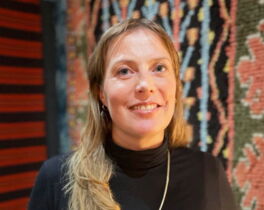
Almost in Russia
Sanni Marjaana Naukkarinen
Sanni Naukkarinen is a visual anthropologist holding a Master’s degree from UiT The Arctic University of Norway. She is currently based in Finland, where she is pursuing her doctoral studies in Border Studies at The University of Eastern Finland, focusing on mobility, material culture, identity, and belonging. She integrates artistic methods such as installation, photography and film into her work, bringing together her passion for visual arts and anthropology. Her practice is driven by a desire to explore the stories we tell about ourselves and others.
Learning to Fly
Amelie von Marschalck
Amelie von Marschalck is a freelance filmmaker and art educator in Hamburg. She completed her film studies at the Hochschule für bildende Kunst (HfbK, University of Fine Arts) in Hamburg and at the Pompeu Fabra University in Barcelona in 2024. During her earlier studies in social anthropology in Hamburg and Cuernavaca, Mexico she learned the language of ethnographic film. In her films, she explores socio-political issues and creates insights into the lives of ethnic minorities.

Tokiwadaira Danchi
Haru Kato
Haru Kato is a Japanese filmmaker currently studying in the Department of Film at Nihon University College of Art. Alongside directing music videos and documentaries, he works as a freelance crew member on film, commercial, and music video productions to expand his practical experience. His academic focus is documentary filmmaking, with a particular interest in direct cinema, inspired by the work of Frederick Wiseman. His film “Tokiwadaira Danchi” excludes narration and music, aiming to let viewers reflect on the current social realities of Japan for themselves and has been nominated for the Student Showcase Award at the Little Venice Film Festival 2026.

Distant Intimacy
Yuzhe Zhu
Yuzhe Zhu is a documentary filmmaker and researcher whose work explores the beauty and complexity of everyday life. She is currently pursuing a PhD at Monash University and holds a Master’s degree in Visual Anthropology from the University of Manchester. During her research she examines the intersection of future, design, and anthropology. For Yuzhe filmmaking is a medium for both self-expression and a way to deepen her understanding of the world. She is particularly interested in highlighting the overlooked and mundane moments that reveal profound insights about the world, as well as the intimate emotional connections between people.
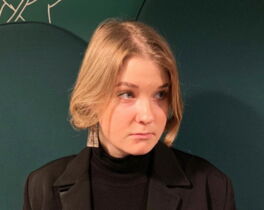
A Decent Person
Nastia Zheltova
Nastia Zheltova is a Russian documentary film director and editor. She studied Contemporary Documentary Photography at the School of Photography Polezreniya and later graduated from the documentary film laboratory at the Moscow School of New Cinema. Her debut film “A Decent Person” was screened at several international festivals, including IDFF Artdocfest, Flahertiana, and the PLONS! International Short Documentary Film Festival. The film received the Best Short Documentary award at the YouthCore Film Festival, as well as a Special Diploma at IDFF Meetings in Siberia for its sensitive observation of human emotions.

Work Between Us
Elaine Goldberg
Elaine Goldberg is a researcher and filmmaker based at the Department of Social and Cultural Anthropology at the University of Vienna in Austria. She holds a background in Theatre Studies from Ludwig-Maximilians-Universität Munich, Arts du Spectacle from Université Rennes 2 in France, and Science and Technology Studies from the University of Vienna, where she has also worked as a research assistant in the fields of technoscience, materiality, and digital cultures. Her research focuses on epistemic practices and spaces explored through audiovisual methods, examining the relationship between media and world-making practices.
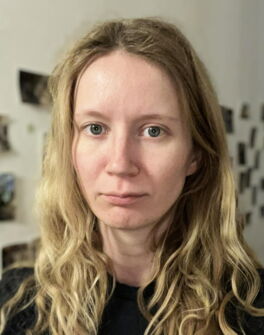
Helen Vaaks
Helen Vaaks is studying for a PhD in Visual Ethnography at the Department for Social and Cultural Anthropology of the University of Vienna. She is currently working on a research project called "Enabling Migrants to Cycle" (EMCY). In this project, she is looking at how people with migrant backgrounds are represented in society and the reasons why they don't cycle. In 2024, she was part of a research team that worked on an ethnographic film called "Zwischen uns Arbeit (Work Between Us)" with Elaine Goldberg. They explored the idea of "care" and how researchers from different subjects work together in caring communities.
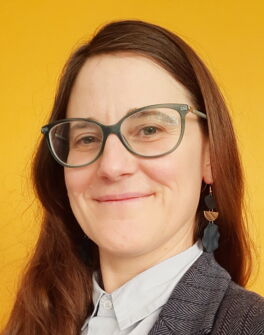
Living Room (i-doc)
Caterina Sartori
Caterina Sartori is a visual and urban anthropologist. She is currently Research Associate for the High-Rise Landscapes project at the University of Manchester, in the frame of which she researches cladding remediation processes in London. She is interested in spatial and housing justice, ideas of value and investment, and creative research methodologies. The interactive online documentary "Living Room" was developed as part of her doctoral research at Goldsmiths (University of London). She previously held the post of Film Officer and Film Festival Director at the Royal Anthropological Institute (2015-2023).
Highway Nomads
Alberto Arnaut Estrada
José María Castro Ibarra
Alberto Arnaut was born in Mexico City and studied Social Communication at the Autonomous Metropolitan University. He holds a Master’s degree in Documentary Film from the University Center of Cinematographic Studies (CUEC). His documentary debut “Armed to the Teeth” from 2018 premiered at festivals including Movies That Matter, where it won the Camera Justitia Award, as well as Ambulante, Guanajuato International Film Festival, Viva México and the New Latin American Cinema of Havana. The film had a significant impact on Mexican political discourse and was named one of the most important films of 2018.
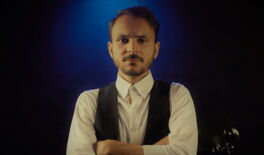
Throne Of Wood
Sadegh Kazemi
Sadegh Kazemi is a documentary writer and director, as well as a researcher in the fields of education and media literacy from Iran. His professional career in documentary cinema focuses on human-centered, social and character-driven narratives. Sadegh’s short documentary “Throne of Wood” (2025) has been selected for the main competition at the 19th Cinema Verite International Documentary Film Festival. He is currently developing his feature documentary “Blood Rebel” in Turkey. His works are recognized for their humanistic approach, precise narrative structure, and their blend of realism with poetic tone.
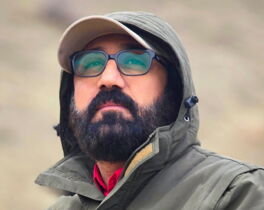
Safoora
Perviz Rostami
Parviz Rostami was born in Oraman Takht in Kurdistan, where he developed an early interest in painting. During the Iran–Iraq War, he migrated to Sarvabad, where he continued his education. He studied painting at university and graduated in the field before entering filmmaking in 2001 with his debut film “My Shoes”. In 2015, Rostami received a first-class degree in directing. Since then, he made 18 short films, seven mid-length films and three TV series. He holds a Bachelor's degree in Visual Arts as well as a second-degree qualification in documentary directing. He is a member of the Visual Arts Association and has nearly 20 years of experience in filmmaking.
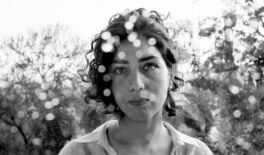
Souls
Laura Basombrío
Laura Basombrío was born in Salta, Argentina. She graduated as a cellist at the Conservatory and as an Image and Sound Designer at the Universidad de Buenos Aires (UBA), where she taught Documentary Screenwriting. Nowadays, she works as a film editor. In 2023, her debut feature “Souls”, for which she gained support of the IDFA Bertha Fund, premiered at the Mar del Plata International Film Festival, winning the awards for Best Director, Best Editing and Best Cinematography in the International Competition.
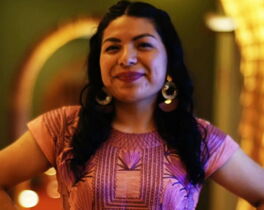
Clay Woman
Concepción Vásquez Martínez
Concepción Vásquez is an Ayuujk woman from Tlahuitoltepec, Oaxaca, and a Community Development Engineer who is dedicated to preserve her community’s cultural traditions and to empower rural women. In 2020, she joined the “Polos Virtuales” writing workshop, beginning her path in filmmaking. In 2022, she received ECAMC support for her first documentary “Mujer de Barro” about her mother’s struggle against machismo and gender-based violence. She also received a photography award and the 2023 “Voice of Women” award from INMUJERES. Through film, she highlights Indigenous women’s stories of resistance and social transformation.
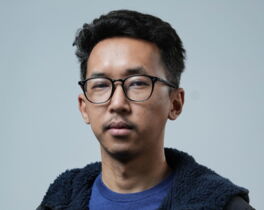
Kathmandu Monsoon
Ngima Gelu Sherpa
Ngima Gelu Sherpa is a street photographer, independent filmmaker and educator born in the Everest region of Nepal and based in Kathmandu. He completed his Masters in fiction film direction, which he pursued as part of the Kino Eyes: The European Movie Masters program from 2018 to 2020, with the support of an Erasmus plus scholarship. Moreover, Ngima is an alumnus of Rotterdam Lab in 2023 and has participated in Berlinale Talents in 2023. His films were showcased and awarded at various festivals. Currently, Ngima Gelu Sherpa imparts his knowledge and expertise in film production as a lecturer at Kathmandu University.
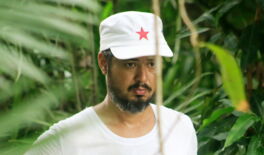
Mukunã Apprentice of Shaman
Rodrigo Sena Sena Sena
Rodrigo Sena is a Brazilian audiovisual director who has remained in photojournalism for 10 years and has made award-winning short films. He participated in various artistic residencies. Currently, Rodrigo is the director and screenwriter of “Encantarias”, a TV series that portrays Afro-Indigenous religions, and is developing his first feature film. His research into the world of Afro-Indigenous religions began in 2003 and is the starting point for some of his films. He expands his work with the creation of Cine Terreiro, a film festival that addresses themes related to the sacred and also develops projects through his production company, Ori Audiovisual.

Angry Spirits
Iris Pakulla
Iris is an anthropologist, author, and filmmaker of Spanish, German, French and Polish heritage. She is currently conducting research in Mexico as part of an ERC-funded research group at the Visual and Digital Cultures Research Center at the University of Antwerp. In her previous anthropological research, including her PhD at the University of Cambridge with fieldwork in Mongolia, she focused on topics such as reproductive extractivism, the anthropology of labour, everyday politics, human–environment relations and health. After working for many years in the documentary film industry as a producer and author, she directed her first feature-length documentary film, Angry Spirits.

Marimari
Paul Wolffram
Paul Wolffram is an award-winning director and producer whose work expands the boundaries of documentary filmmaking and explores how we understand the world. Over the past 20 years, he has collaborated with communities in Papua New Guinea, the Pacific Islands and New Zealand, engaging with traditional mythologies, indigenous music and dance, and spiritual practices. His films have received numerous awards, including Best Director at the New York Short Documentary Film Festival in 2021, Best Cinematography at the Nepal Music Film Festival in 2015, and the Jean Rouch Award for Collaborative Filmmaking in 2011.
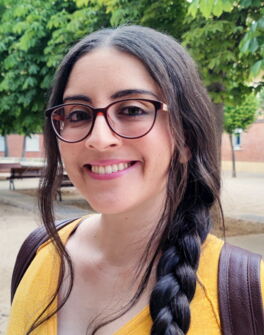
City on the Back
Fadia Paola Rodas Ziadé
Fadia Paola Rodas Ziadé is an Ecuadorian filmmaker and visual anthropologist. Currently, she is a doctoral student in the anthropology program at the Universidad Autónoma de Madrid in the research line of Audiovisual Anthropology and Digital Humanities. Her short film “Minadores” (2007), about recyclers at Quito's largest garbage dump, was widely screened at international festivals. She premiered her short film “Galapagos: Prisión de Basalto” in 2013. “City on the Back” is her debut feature documentary. As a researcher, she explores issues of environment, ethnicity, gender, health and human rights.
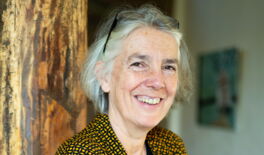
Legacy of Silence(s)
Janine Prins
Janine Prins is an independent visual anthropologist and documentary filmmaker affiliated with the Visual Ethnography programme at Leiden University. Her main research interests lie in the exploration of new combinations of audiovisual media in relation to social science topics, be it through the use of television, cinema, new media, design thinking or most recently: installation art practices. As a research fellow for Waag Society, she participated in RICHES, a project on 21st-century cultural heritage, in collaboration with the Dutch National Museum of Ethnology.

Help Me Help You
Stéphanie Sassen
Stéphanie Sassen, born to Dutch parents and raised in Belgium with a strong connection to Egypt from an early age, brings a unique multicultural perspective to her filmmaking. Her work explores questions of representation, power, and the meaning of “help” across cultures. In “Help Me Help You” she collaborates closely with young Ju/’hoansi filmmakers, combining participatory, ethnographic, and documentary methods to create space for dialogue across generations and continents, critically examining the dynamics of aid, the intentions behind intervention, and what it truly means to make a difference.

Wind's Heritage
Nasim Soheili
Nasim Soheili is a director from Mashhad, Iran. She has a master’s degree in social communication, has worked as a social journalist for many years and is a graduate from the one-year filmmaking course of the Iranian Youth Cinema Society. Her family’s background in filmmaking and her own social activity in the field of women’s and ethnic minorities rights inspired her to make documentaries. Her two previous works are “Maat” and “Eli Banu”, with “Maat” being present in several international festivals. Besides researching and making documentaries, she is currently teaching at universities and film schools, and is also a social activist.
A Letter to Chinatown
Alexandra D'Onofrio
Alexandra D’Onofrio is a visual anthropologist and director. Her research combines collaborative, observational and experimental filmmaking, theatre improvisations and participatory animation with a focus on migration, memory, imagination and storytelling. She collaborates with the Granada Centre for Visual Anthropology, University of Manchester, and a number of other MA programmes and Summer Schools in Europe where she teaches visual and social anthropology.

Elena Barabantseva
Elena Barabantseva is Senior Lecturer at the University of Manchester and works with post-positivist research approaches using archival, ethnographic and audio-visual methods. Together they connect social research and collaborative documentary practice, including the film “A Letter to Chinatown” (2025).

Bride of Aravan
Lesley Branagan
Lesley Branagan is an independent filmmaker and social anthropologist, specializing in Indian culture from Australia. As an experienced storyteller with a long track record of engagement in India, her work foregrounds the voices and experiences of her subjects. Transformation of spiritual expression, identity, belonging, following one’s own “swadharma” or unique purpose are often topics to her films. Her films have been screened internationally at film festivals and on television and her film “A Life Exposed: Robyn Beeche” received various awards. Currently, she works as a social anthropology academic at Hamburg University.
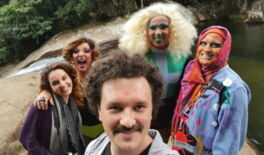
Drags in da´ House
M. Leaha, P. Braz, DiVina, Satine and Gab
Mihai Andrei Leaha, Paula Bessa Braz
Gab Brasil is a trans woman, Drag Queen, DJ and performer admired in the music and entertainment scene. She provides unique experiences with visuals and soundtracks, exceptional delivery across an extensive portfolio. Gab Brasil has performed at events for renowned brands such as Amazon, Youtube, TikTok, Google and much more, in addition to collaborating with large advertising agencies.
Dida Silva aka Di Vina Kaskaria is a brazilian multiartist, based in São Paulo and Brasília. Having drag as its main language for more than a decade, as a performer, producer, costume designer and stylist, sfx make up artist and more. Thanks to her regular appearances at major events, she is an undisputed icon of nightlife across the country. She is currently active both on stage and behind the scenes as a screenwriter, art director and executive producer for other artists, photographs events and works as a filmmaker specialising in adult films.
Caio Rincon performs under the drag name Satine, and is a multifaceted artist based in Brazil. His work spans various creative fields, including drag performance, art direction, event production, and DJ. As Satine, Rincon explores the art of drag as a means of self-expression, pushing the boundaries of gender performance. His background in communications informs his approach to drag, as well as his work as an art director.
Paula Bessa Braz is a Brazilian anthropologist and filmmaker, and a PhD candidate in social anthropology at the University of São Paulo. Her research focuses on musical practices in socially disadvantaged and peripheral communities. Her main areas of interest are musical and visual anthropology, as well as ethnomusicology. She uses ethnographic films as a key research and communication tool and has experience in qualitative fieldwork.
Mihai Andrei Leaha is an Associate Professor, multimodal anthropologist, and ethnographic filmmaker within the Department of Social Sciences at UiT, The Arctic University of Norway. His research concerns visual disinformation and trust in digital environments, multimodal ethnographic methodologies, embodied music cultures, popular culture, Roma studies, and the socio-material impacts of generative AI technologies. He is Chair of the Commission on Visual Anthropology of IUAES (2023-Present).
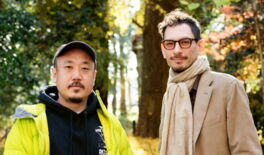
Rhythms of Sodade
Kay Aoki, Masashi Nagara
Kay Aoki is a cultural anthropologist and filmmaker whose work connects ethnographic research with cinematic practice. Raised between the UK, France and Japan, his transnational background informs his interest in displacement, language, and belonging. He has conducted long-term fieldwork in Cabo Verde, focusing on Creole identity, music, and migration in postcolonial contexts. Kay is an associate professor at Kansai University and received his PhD from Kyoto University. His recent film “Rhythms of Sodade” was selected for the Tokyo Documentary Film Festival (2025), where it received the Semi-Grand Prix and the Audience Award.
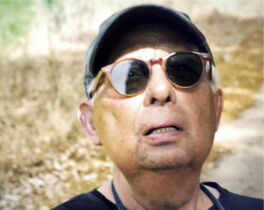
Waterline
Rui Simões
Rui Simões studied Film and TV Directing at Institut des Arts de Diffusion in Brussels. In 1974, he directed two post-revolution documentaries, “Deus, Pátria, Autoridade” and “Bom Povo Português“ in Portugal. Besides producing and directing documentaries and other films, he also developed works related to other forms of art. He set up the production company Real Ficção in 1986, connecting his work deeply to social issues and the arts. He is a founding member of APCA (Association of Cinema and Audiovisual Producers) and APORDOC (Association for Documentary and the Portuguese section of Amnesty International). Apart from documentaries he produced a fiction feature film in 2023.
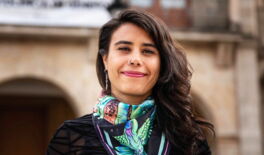
Macula
Mariana X. Rivera
Mariana X. Rivera is a visual anthropologist and researcher at the Social and Ethnological Direction from the National Institute of Anthropology and History of Mexico. She is the co-founder of Urdimbre Audiovisual where she works as a filmmaker, photographer and editor. Her films focus on gender issues and social conflicts. Besides directing documentaries and video clips, she published articles on documentary, ethnographic film, visual anthropology, weaving and memory. The seminary in Poetics of Imagination: Experimental Methodologies of Audiovisual Anthropology is coordinated by her.

Making Space
Nikita Parikh
Nikita Parikh has worked with children for many years, travelling to classrooms across India while working with Tech For India, an NGO which works in government and low-income private schools. During her Master‘s degree in Education at Tata Institute of Social Sciences, she started researching and using participatory media with teenagers. As a filmmaker she is driven by creating understanding, empathy and change. Her short documentary “Making Space” premiered at the International Documentary and Short Film Festival Kerala and was in competition at the Indian Film Festival of Los Angeles.

You In This City, This City Inside You
Amartya Ray
Amartya Ray is an independent filmmaker based in Mumbai, India and recently graduated from the Film and Television Institute of India. He has directed both fiction and non-fiction short films which were screened at international and national film festivals. Furthermore, he secured grants to complete short documentaries from PSBT (Public Service Broadcasting Trust) and Charles Correa Foundation. His films deal with the intersectionality of the self and the modern world, exploration of the urban landscape and the ephemeral within the mundane. He also writes poetry, which has been published digitally.

Shape of Absence
Yitong Lu
Yitong Lu is an independent filmmaker based in Shanghai who has also lived in Beijing and Chicago. She received an MFA in Film, Video and New Media from the School of the Art Institute of Chicago in 2019. Her films have been exhibited internationally, shortlisted at the Rome Film Festival, and collected by the National Museum of China and the Museum of Chinese Ethnology. Her work explores themes of memory, locality, and relationships between self and others, combining poetic language with experimental imaging techniques. Her recent projects address the influence of short-video culture and the spread of misinformation.

Death in Palermo
Caterina Pasqualino
Caterina Pasqualino is a filmmaker, anthropologist and research director at the CNRS (Centre national de la recherche scientifique). In Andalusia she filmed a flamenco performance, in Cuba she filmed themes linked to materiality and the emergence of an ‘emotional contagion’ between participants in possession rituals and in Palermo she filmed emerging communities. She works on the relationship between art, cinema and anthropology, and in particular on performance as an issue of identity and politics. Her recent work has led her to conceive the anthropological field as a performative device for collaboration, staging and reconstruction.

Only if the Baby Cries...
Shadab Farooq
Shadab Farooq is an Indian independent documentary filmmaker and journalist from Bhaderwah. His work focuses on intimate portrayals of marginalized communities and overlooked social realities. His student film on migration was a finalist at the Kolkata International Film Festival in 2022. He later directed “Only if the Baby Cries…”, a short documentary commissioned by the Public Service Broadcasting Trust, portraying the entirely deaf and mute village in the Kashmir hills. In the same year, he was also a finalist for the Human Rights and Religious Freedom Awards for his photojournalism on the Indian farmers’ protests.

Make it Look Real
Danial Shah
Danial Shah is a Pakistani independent documentary photographer and filmmaker based in Brussels. He holds a joint-Masters degree in Documentary Film Direction from DocNomads and diploma in Documentary Film from the University of California, Los Angeles. Currently, he is pursuing his artistic PhD at Sint Lucas School of Arts and University of Antwerp, Belgium. His works were published in several magazines and newspapers and other media. Danial taught courses of photography and storytelling at different universities. He is interested in issues related to human condition and the environment they interact with. He works on commission and on editorial assignments.

Ichi: Marks in Time
Paul Basu
Christopher Thomas Allen
Paul Basu is an anthropologist specialising in critical heritage, museum and material culture studies in transcultural contexts. He founded the Global Heritage Lab in 2022 at the University of Bonn and is now Professor of Anthropology and Curator at the Pitt Rivers Museum, University of Oxford. His research uses ethnographic, historical and participatory methods to explore how pasts are materialised in the present and shape futures, with a focus on colonial archives, decolonial approaches and West Africa. Previously, he worked in film and television, which informs his audiovisual and multimodal research practice.

Oceanbone
Lani Cupchoy
Lani Cupchoy, Ph.D., is a filmmaker whose work merges documentary, experimental, and ethnographic filmmaking to explore urgent themes of Indigenous sovereignty, cultural memory, and social justice. As a Xicana Afro-Indígena and Kānaka Maoli-Chinese storyteller, she is the director of six films. Cupchoy’s films have screened at film festivals, universities, and community venues, earning recognition for their powerful visual storytelling and commitment to Indigenous and decolonial narratives. Her filmmaking is distinguished by its poetic style, visually layered compositions, and grounded community collaborations.

Tarisi Vunidilo
Tarisi Vunidilo has an MSc in Anthropology and a Postgraduate Diploma in Maori and Pacific Development from the University of Waikato, Hamilton, New Zealand, a Postgraduate Diploma in Arts, majoring in Archaeology, Australian National University, Canberra, and a BA in Geography, History and Sociology, University of South Pacific, Suva, Fiji. She was a Professional Teaching Fellow (PTF) and Lecturer at the University of Auckland from 2012 to May 2018 before becoming an Assistant Professor in Anthropology at the University of Hawaii-Hilo in August 2018. She is an inaugural professor of the future Department of American Indian and Indigenous Studies and is currently part of the Department of Chicana/o and Latina/o Studies.
Shiva Linga: A Visual Quest
Deepak Tolange
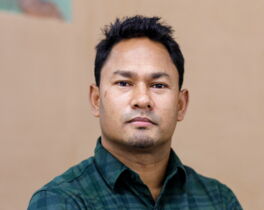
Deepak Tolange is a Nepali filmmaker, photographer and researcher who is interested in innovation, history, culture, the environment, and social justice. During his CoMuse Fellowship, he researched the provenance of a Shiva Linga from Nepal in the “Museum für Asiatische Kunst” (Asian Art Museum) and developed a documentary on the significance of sacred objects in Hindu communities. He holds an MA in Visual and Media Anthropology from Berlin (DAAD scholarship) and has worked internationally. Since 2018, he teaches film and photojournalism at Kathmandu University. His paintings, photography, and documentary films received multiple awards.

Have You Seen My Gods?
Amitabh Joshi
Amitabh Joshi is a director and producer whose work blends cultural storytelling with independent documentary and broadcast media. His first feature documentary “Tashi’s Turbine” was supported by the Center for Asian American Media Documentary Fund and premiered on PBS's WORLD Channel. He was selected for the Lincoln Center Artist Academy at the New York Film Festival and directed and shot projects for Art21. He taught as an instructor at the School of Visual Arts in New York City in the Social Documentary MFA program. Amitabh continues to create work across the US, Nepal, and beyond, focusing on intimate, human-centered stories rooted in place and history.

8 Seconds
Jean-Marie Vinclair
Jean-Marie Vinclair is a French filmmaker who studied Art and Cinema. He questions memory, transmission and adolescence, and works on a singular form of self-portraiture that consists in seeing oneself through the other. Jean-Marie has directed several fiction and documentary films, including the short film “En partance clandestine” (1997) with Atom Egoyan, followed by the award-winning documentary “Le Nô vu d’ailleurs” (2003), “La Caméra interdite” (2007), “My Sweet Hooligan” (2013), and “Le Temps du regard and Contre-Jour” (2016). His first feature-length documentary “8 Seconds” (2025) explores the question of family secrets through an initiatory journey.

The Sacrifice
Robert Lemelson
Robert Lemelson is a cultural anthropologist, ethnographic filmmaker and philanthropist specializing in transcultural psychiatry; Southeast Asian Studies, particularly Indonesia; and psychological and medical anthropology. He currently is a research anthropologist in the Semel Institute of Neuroscience UCLA (University of California, Los Angeles), an adjunct professor of Anthropology at UCLA, and a visiting professor at the University of Southern California. The documentary film company Elemental Productions was founded by him in 2007. He has directed and produced over a dozen ethnographic films related to culture, psychology and personal experience.
The Mbako Trial: Myth and Reality
Jean-Michel Kibushi Ndjate Wooto
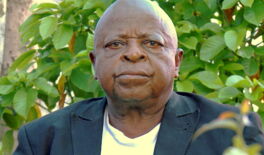
Jean-Michel Kibushi Ndjate Wooto is a major pioneer of black African animated cinema and a specialist in stop motion animation. He is a transmitter of Congolese culture and currently a doctoral student in Art and Art Sciences at the University of Ghent and the Free University of Brussels. In 1988, he created the first mobile studio for the initiation and production of animated films in the DRC and in 2004, the rural festival Caravane de Cinéma mobile pour le Sankuru. His research focus in animated films and documentaries reflect on magical realism in the artistic representation of the character Anioto-Leopard Man during the colonial era.
Maree's Backyard
Amelie Marie Nadia Ward
Amelie Marie Nadia Ward is a Franco-Lebanese anthropologist who began her academic path in Geneva studying philosophy and the history of religions before specializing in anthropology. Supported by Macquarie University in Sydney, she conducted fieldwork for her master’s research on art-based healing practices among Indigenous communities in southeastern Australia, which is an interest she further developed during her doctoral studies at McGill University in Montreal. Her PhD explored themes such as care, mourning, repair, and the ongoing violence of settler colonialism, as well as sensory and environmental anthropology.
Spring in Kangiqsualujjuaq
Marie Zrenner
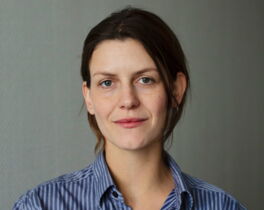
Marie Zrenner was born in Munich, Germany. After studying Sculpture at the Academy of Fine Arts in Munich and at the École Recherche Graphique in Brussels, she began studying documentary film directing at the HFF Munich in 2017. Her directing work includes documentary and fictional short films as well as music videos. In her work she is interested in decolonial approaches and topics such as mental health, belonging and solidarity, focusing on the perspective of girls and women. She has won various awards for her work, including the 2023 German Short Film Award for the best fiction film.

Wind Has No Tail
Ivan Vlasov
Ivan Vlasov, born in Tula, studied at VGIK in the workshop of S.V. Miroshnichenko. His work explores new ways of representing Russian culture and has received awards at festivals such as Flahertiana, Salt of the Earth, Cinema of the Future, and Message to Man, including the Laurel Branch Prize.
Nikita Stashkevich
Nikita Stashkevich, born in St. Petersburg, studied at the St. Petersburg State Institute of Cinema and Television and later at VGIK. His films have been recognized at major festivals and he received the Laurel Branch Award and the Broadcast Film Critics Guild Award for Best Debut in 2021.
Kotlovan
Nikolay Bem
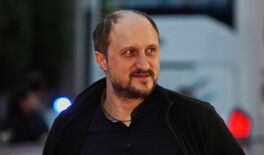
Nikolay Bem was born in Yakutia in Neryungri and currently lives in Krasnoyarsk. He is a member of the Union of Cinematographers of the Russian Federation and founder of the SiberiaDOC project. The project aims to decentralize film production from the cultural centers St. Petersburg and Moscow and develop independent cinema in Siberia. In 2021, he became a laureate of the award of the Russian Society of Knowledge for contribution to education in the field of Culture and Art.
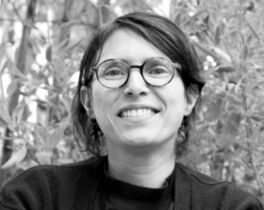
We Had Fun Yesterday
Marion Guillard
Marion Guillard is a French filmmaker, researcher, and visual artist based in Brussels. Raised in Paris, she first studied agriculture in Burgundy before turning to nature protection and animal cinema. She later trained in filmmaking and completed a Master’s degree in Speculative Narration, developing both artistic and theoretical approaches to her work.
Marion’s work focuses on the role that representations of nature have in our contemporary societies. Since 2017, she has co-directed a teaching unit at ERG dedicated to experimental eco-cinema and analog film practices.

Recording to Notice
Nienke Winkel
Nienke Winkel is an interdisciplinary visual anthropologist who recently graduated from Leiden University in the Netherlands. With a background in biological sciences, she has focused on exploring environmental anthropology and more-than-human worlds. She is particularly interested in sensory-driven and creative research and passionate about immersive storytelling that invites a reimagining of our ecological relationships.

Sunrise - At the Frontiers of Feasibility
Johannes Kohout, Janek Sam Totaro
Johannes Kohout and Janek Totaro are two German documentary filmmakers and cultural researchers. They founded the Göttingen-based film production company Akinema in 2019 after completing their Master’s degrees in Visual Anthropology at the University of Göttingen. Their work focuses on people and their practices, especially within scientific contexts, highlighting the often unseen processes behind research. Their films have been developed in collaboration with research and cultural institutions, received public funding, and were presented internationally at film and science festivals, where they have won several awards.

What about the F-Word?
Nora Diekmann
We were a collective group, and many people
Nora Diekmann was born in Hanover, Germany and is a student of Political Science and Cultural Anthropology at the University of Bremen. She has no professional previous experience in filmmaking but has been deeply interested in films and making films ever since her childhood. She studied in Guadalajara, Mexico, and realized a documentary about „Parque Revolución“, an urban space where marginalized people come together to feel safe and express themselves. The documentary “What About the F-Word?“, her feature film debut, was a case of seeing something the world should talk about more, and taking a camera to get the message out.

Mantènnere - Holding the Sacred Sound
Diego Pani
Diego Pani is an ethnomusicologist and musician from Sardinia, Italy. He is a PhD candidate in ethnomusicology at Memorial University of Newfoundland and a Fulbright Scholar in Residence at the University of New Mexico, where he teaches audiovisual ethnomusicology, popular music, and Sardinian multipart singing. His research focuses on traditional singing and mediatization, combining ethnomusicology with audiovisual storytelling. In Sardinia, he collaborates with the Istituto Superiore Regionale Etnografico on projects related to “tenore” singing and its safeguarding as UNESCO Intangible Cultural Heritage.

God in a Military Uniform
Kano Endo
Kano Endo is a Japanese documentary filmmaker and visual folklorist, based in Tokyo. He produces documentary films across Japan and Taiwan. His methodology is to look at contemporary society while focusing on traditional and folk culture. He involves himself in the organization of the Visual Anthropology and Ethnographic Film Competition of the Tokyo Documentary Film Festival and is also active as a distributor and screening organizer. He co-directed and produced “Kagura Troupe On The Beat(廻り神楽)” which won the Mainichi Film Awards for Best Documentary in 2018.

Yohei Fujino
Yohei Fujino is a professor at the Graduate School of Human Relations at Keio University. He has conducted anthropological research throughout East Asia, focusing on Taiwan.

Ökul Näs - Around us
Enrico Micelli
Enrico Micelli is a filmmaker from Resia, Italy. He began his career at Uponadream Studios in Gemona del Friuli, working for two years as an editor and camera operator. He later became a freelance videomaker, developing technical expertise and a personal style while collaborating on diverse audiovisual projects. He has worked with institutions and companies such as the Julian Prealps Natural Park, Incipit, Agherose and Notorious Cinema. In 2025, he made his directorial debut with “Ökul Näs – Around Us”, selected for several film festivals, including the Nuovi Mondi Film Festival and the Julian Alps Film Festival.
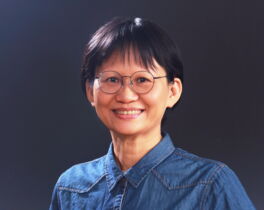
60 Years of Singing Ballads in Hakka : Hsu Mu-chen
Shao-chi Ku
Shao-chi Ku is a senior Hakka cultural worker. Born in a farming village in Taiwan, Shao-chi is passionate about oral history, cultural assets, and human-interest stories. Besides her native tongue Sixian dialect, she is fluent in Hoiliu Dialect as well due to living and working in Hsinchu for a longer time. She was nominated for Golden Harvest Awards for Outstanding Short Films and awarded merit award twice in Taiwan International Ethnographic Film Festival. Furthermore, she won first prize of Nonfiction in Zhao-Zhen Zhong Literature Prize and second prize of Modern Poetry in Zhuo-Liu Wu Literature Prize.

Once Upon a Time in Dongmen
Yu Pei
Xuelai Ni
Yu Pei is a director who grew up in Shanghai and studied Anthropology and Sociology at the Chinese University of Hong Kong. Her research interests include migration, diaspora, gender, and youth subcultures, focusing on East Asian societies and post-socialist contexts. She observes from the perspective of everyday life and personal history, combining fieldwork with ethnographic documentary filmmaking and documentary photography. She aims to present memory and emotion through multiple visual media, exploring their intersections with space, gender, power, and socio-political economic structures.
Xuelai Ni is a director as well and grew up between Shanghai and Guangzhou. She currently studies at the School of Journalism and Communication at the Chinese University of Hong Kong. Her practice includes documentary, sound, performance, and digital art. Approaching from an anthropological perspective, she explores the complexities of nonverbal media and their potential to engage with communities. Her research interests include memory and emotion, spiritual experiences and ecstasy, and mechanical bodies and synthetic life, aiming to perceive the boundaries between human and nonhuman life within a posthuman context and imagine new ecosystems.